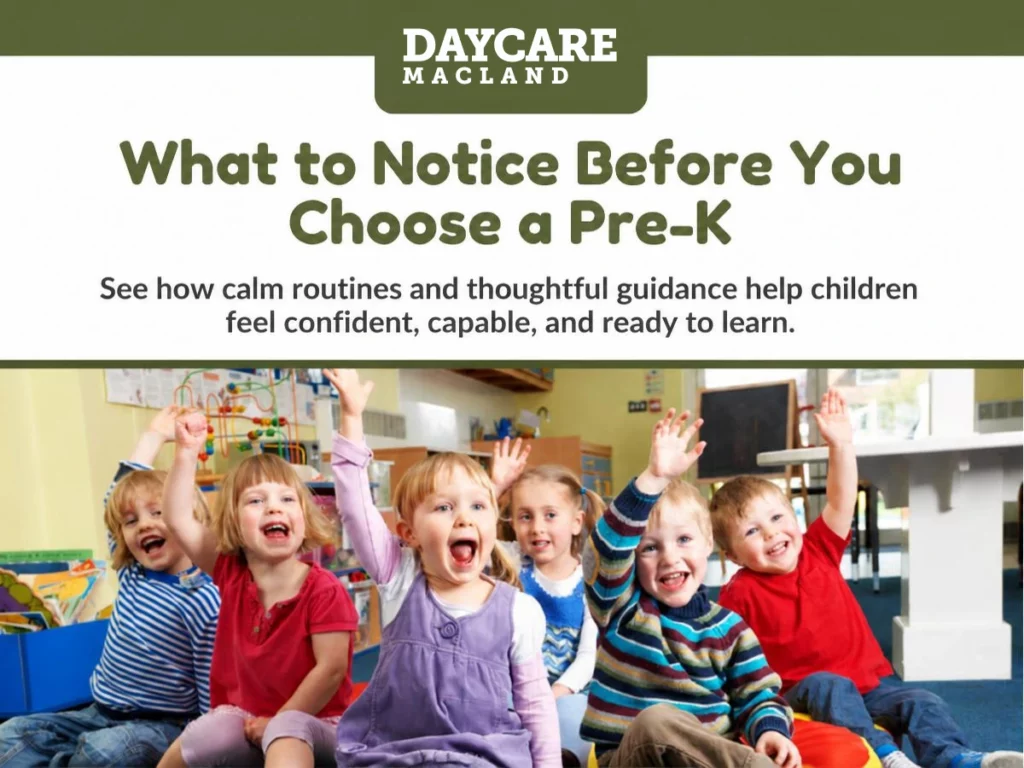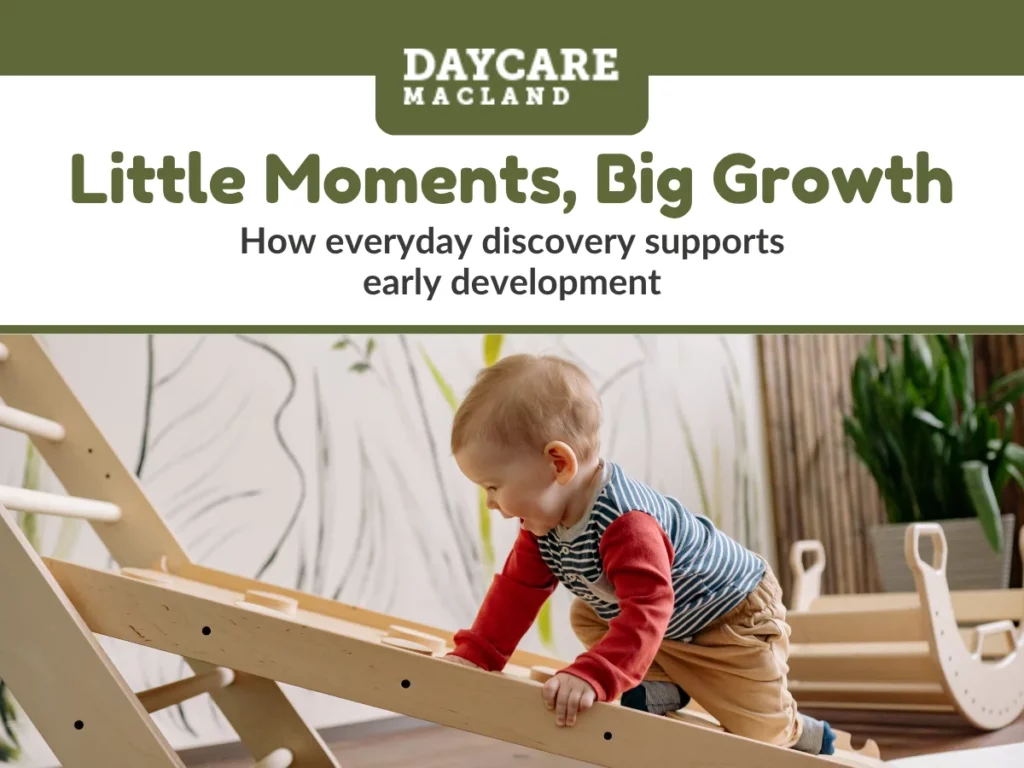

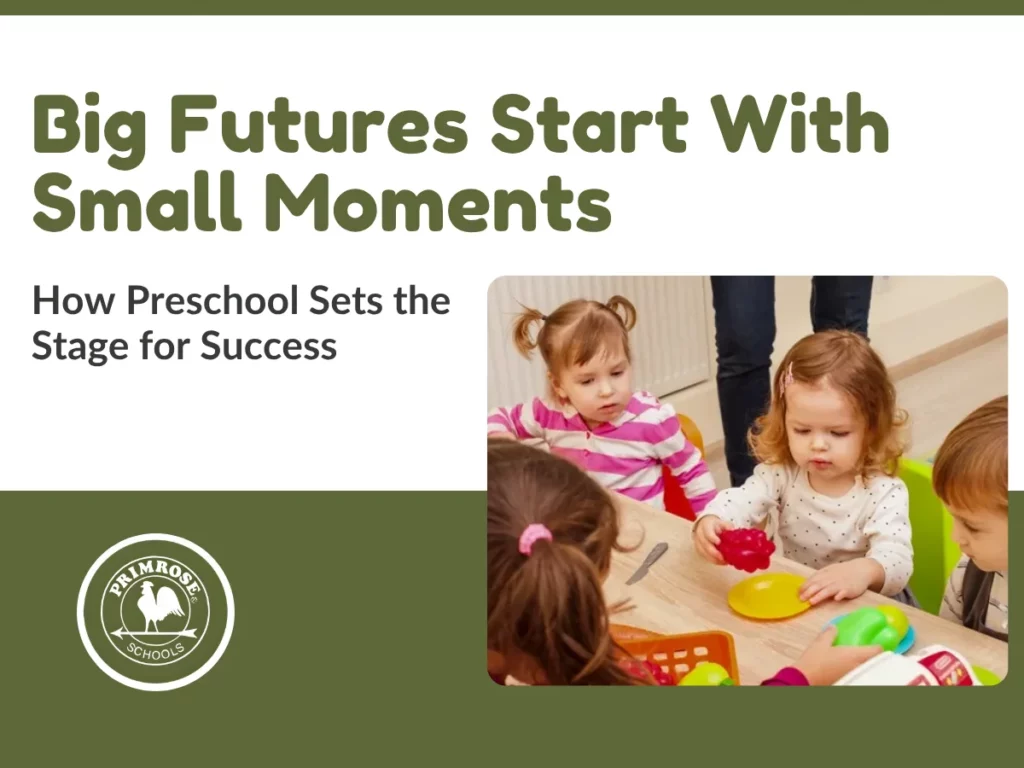
A parent may enter a preschool tour expecting to notice the toys, classroom displays, and learning materials first. Often, the more revealing moment is much smaller.
It may be how a teacher responds when a child spills something, struggles to separate from a parent, or cannot find the words to explain what is wrong. These ordinary moments show whether a classroom looks prepared or whether the adults understand how to support young children with patience, purpose, and care.
When exploring preschool and Pre-K programs in Marietta’s Macland Pointe area, families should look for experiences that offer more than a full schedule or a list of academic activities. A strong early learning experience helps children become more confident, capable, and comfortable in a classroom community.
The goal is not to make a four-year-old behave like a kindergartner before that child is ready. It is to build a foundation for communication, participation, curiosity, and growing independence.
Preschool and Pre-K Support Different Stages of Growth
Preschool and Pre-K are closely connected, but they serve distinct stages of development.
Preschool often gives children their first meaningful experience of learning in a group. They begin practicing how to separate from a caregiver, follow a classroom routine, listen to stories, communicate their needs, and interact with peers.
Pre-K builds on that foundation. Children gain more opportunities to sustain attention, follow multistep directions, participate in conversations, solve small problems, and complete familiar routines with less support.
That does not mean Pre-K should feel like elementary school. Young children still need movement, imagination, repetition, conversation, rest, and play. New skills make the most sense when they are connected to real, tangible experiences.
A good program does not try to keep children busy every minute. It gives the day meaning.
A Meaningful Day Helps Children Connect, Explore, Contribute, and Recover
The value of a preschool day is not measured by how many activities appear on the schedule. It is measured by what children are invited to practice within those activities.
A meaningful day gives children opportunities to connect, explore, contribute, and recover.
Connect
Children connect when they build relationships, join conversations, participate in group experiences, and begin to feel that they belong.
Explore
Children explore when they handle materials, test ideas, ask questions, move, create, build, and investigate.
Contribute
Children contribute when they make choices, share an idea, help with a classroom task, or take part in solving a group problem.
Recover
Children recover when they work through disappointment, return after becoming frustrated, adjust an approach, or repair a disagreement with support.
Together, these experiences help children become secure, curious, responsible, and resilient. When observing a classroom, families can ask one simple question: Do children have opportunities to connect, explore, contribute, and recover throughout the day?
School Readiness Is Bigger Than Letters and Numbers
Families naturally want to know what their child will learn. While early literacy and mathematics matter, true kindergarten readiness cannot be reduced to an alphabet checklist. A child may recognize many letters and still struggle to wait for a turn, ask for help, follow a direction, or participate in a group.
Strong preschool and Pre-K programs in Marietta integrate academic and foundational classroom skills, giving children opportunities to practice:
- Listening and responding during stories
- Recognizing letters, sounds, numbers, and patterns
- Expressing ideas clearly and following familiar directions
- Solving small problems and managing personal belongings
- Navigating transitions between activities with growing independence
Readiness is not about perfection; it is about familiarity. Children feel far more capable when classroom expectations are not entirely new.
Early Literacy Grows Through Real Conversation
Early literacy begins long before a child reads independently. It develops through language-rich experiences: listening to stories, asking questions, learning new words, retelling events, noticing sounds, making predictions, and connecting what they hear to their own lives.
A thoughtful storytime is not simply an adult reading while children sit quietly. A teacher might ask why a character made a particular choice, what could happen next, or how someone in the story might be feeling. These conversations support listening, memory, sequencing, emotional understanding, and verbal expression.
Literacy also appears naturally throughout play. A child might make a sign for a pretend shop, recognize a name on a classroom label, describe a drawing, or dictate a story to an adult. The strongest early literacy experiences make language useful, helping children understand that words allow them to share ideas and make sense of the world.
Early Mathematics Is More Than Counting Correctly
Early math often hides in plain sight. Children use mathematical thinking when they sort objects, compare sizes, recognize patterns, build structures, estimate quantities, identify shapes, and describe spatial relationships.
Block play is a prime example. When a tower falls, the learning does not end – that is often where the most useful thinking begins. A child notices that the base was too narrow or that larger blocks work better underneath, informing their next attempt.
That is early problem-solving. A strong preschool experience gives children room to test ideas rather than stepping in too quickly with the answer. Adults guide the thinking, but children need the satisfaction of discovering that a different approach works.
Getting the right answer matters eventually. Learning how to keep thinking matters first.
Play Is Not a Break From Learning
Play-based learning is sometimes misunderstood as unstructured downtime. In reality, play is where many complex social and cognitive skills come together.
During dramatic play, children assign roles, create rules, and negotiate when someone introduces a new idea. In art, they make choices and revise plans. In sensory play, they compare textures, observe physical changes, strengthen fine motor skills, and build descriptive vocabulary.
Play is not a substitute for learning – it is the primary way learning becomes meaningful for young children. Effective teachers know when to ask a guiding question, introduce a new vocabulary word, add a material, or allow an idea to develop without interruption.
Beyond the Classroom: Outdoor Play and Physical Development
While indoor learning environments foster fine motor control and quiet focus, outdoor play addresses a fundamental piece of early childhood growth: physical development and sensory regulation.
- Sensory Regulation: Open space and fresh air help children process sensory input, burn off excess energy, and release tension, leading to better emotional balance throughout the entire day.
- Healthy Risk Assessment: Negotiating a climbing structure or balancing on a beam teaches children how to assess risk, trust their physical capabilities, and try again after a minor stumble.
- Cooperative Group Play: Outdoor environments encourage larger group dynamics, where children learn to negotiate rules for active games, share space, and include peers in expansive play.
A high-quality early childhood program values physical movement as an essential partner to cognitive development, giving children the outdoor space and time they need to grow strong, confident bodies alongside active minds.
What Quality Looks Like in Everyday Practice
Much of the most vital preschool learning happens beneath ordinary, quiet moments. When a child waits while a classmate finishes with a toy, they are practicing impulse control. Changing an art plan when a material breaks builds flexibility. Returning materials teaches responsibility, and returning to the group after being upset shows emotional resilience.
Quality appears in how these moments are handled:
- Teachers speak to children calmly and respectfully.
- Transitions have clear, gentle cues rather than urgent corrections.
- Materials feel purposeful, and expectations fit the age group.
Calm does not mean silence; it means adults guide active, curious energy without adding unnecessary tension.
Touring a Marietta GA Preschool: What to Look and Ask For
Notice the First Five Minutes of a Tour
Families comparing preschool options in Macland Pointe should pay close attention to the first few minutes of a visit, which often reveal far more than a polished tour script:
- How children are greeted at the door
- How adults respond when a child needs help or comfort
- Whether the room feels organized and purposeful
- How transitions between activities are handled
- Whether adults speak down at the child’s eye level
- Whether your questions receive clear, specific answers
Questions Worth Asking During a Tour
Come prepared with questions that highlight how the program operates day-to-day:
- What does a typical day look like for this age group?
- How do teachers support children during difficult transitions or drop-offs?
- How are literacy and mathematics integrated into everyday play?
- How do children practice independence throughout the day?
- How do teachers guide disagreements between peers?
- How are families kept informed about progress and daily routines?
Frequently Asked Questions about Preschool and Pre-K programs in Marietta
What is the difference between preschool and Pre-K?
Preschool introduces children to group learning, classroom routines, peer interaction, and foundational social skills. Pre-K builds on those skills with a stronger focus on the habits, problem-solving, and independence children will use in kindergarten.
How does preschool help prepare children for kindergarten?
Preschool helps children become familiar with group dynamics, routines, communicating needs, solving small problems, and managing belongings. While early literacy and math are important, social-emotional readiness plays an equal role in school success.
Is play-based learning important in Pre-K?
Yes. Play allows children to apply language, solve problems, test concepts, negotiate ideas, and practice creativity. Effective Pre-K programs combine intentional teacher guidance with developmentally appropriate play.
Choosing a Program That Supports the Whole Child
The best preschool and Pre-K experiences do not try to make childhood disappear faster. They respect the stage children are in while preparing them for the next one. Children need opportunities to build early academic skills, but they also need room to move, imagine, communicate, create, cooperate, and solve problems.
By the time children enter kindergarten, the goal is not for them to know everything. It is for them to believe they can learn.
Explore Preschool and Pre-K Options in Macland Pointe
A website can explain early learning philosophy, but a visit shows you how those ideas feel in practice. Discover an environment designed to support learning, growth, and school readiness by visiting our Preschool and Pre-K Programs page.
Ready to take the next step with confidence? Book a Tour or call us at (470) 523-7867 for more information.